
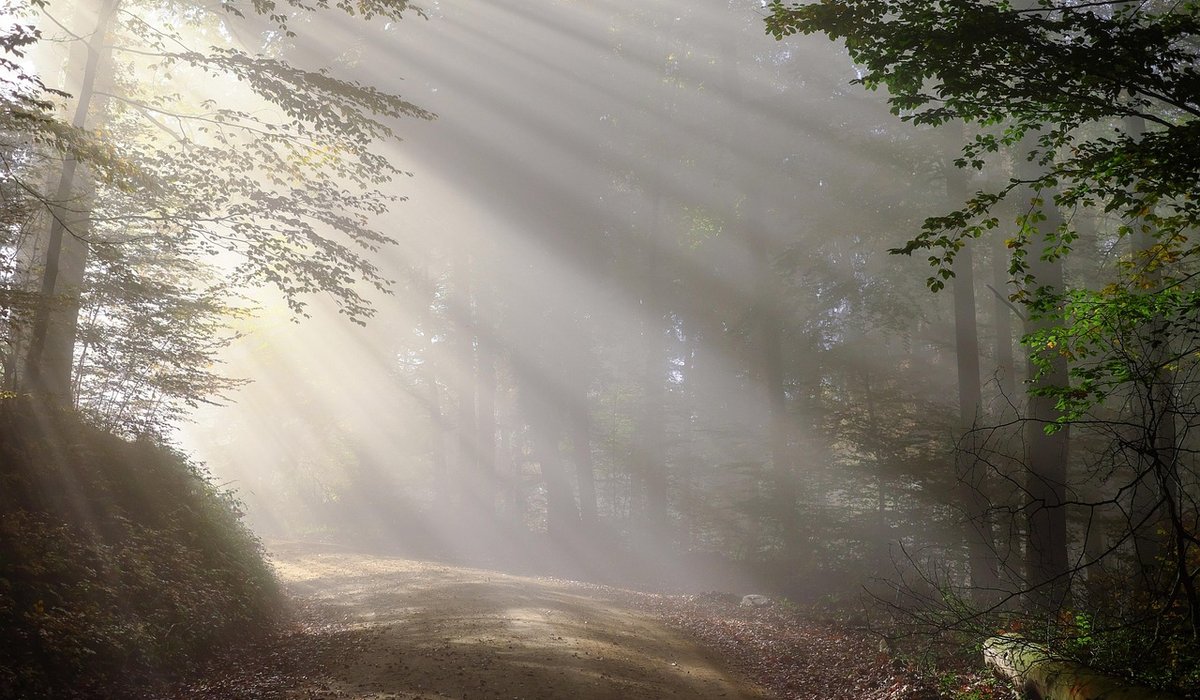
Walking your woodland through the seasons is one of the most useful habits you can develop. A tree that looks a little thin in June might be dead by autumn, and the difference between a manageable problem and a felling operation often comes down to how soon you spot the signs. Native woodland is never static, but the diseases below are now part of the picture for most owners. Knowing what to look for means you can act before a single tree becomes a safety issue or a whole stand is lost.
Ash dieback, caused by the fungus Hymenoscyphus fraxineus, has changed the landscape for anyone managing ash. The first signs are often subtle: dark, diamond-shaped lesions on the bark of young shoots, followed by wilting and blackening of leaves that cling to the tree rather than falling cleanly. In the crown, you may see dieback of fine twigs and branches, and in response the tree produces clusters of epicormic growth – tufts of leaves on the trunk and main limbs. Over several years, the crown thins dramatically, and the tree becomes brittle.
Common ash is the main host, though narrow-leaved ash can also be affected. Spores spread on the wind from infected leaf litter, so the disease moves quickly through connected woodlands. Not every ash will die; a small percentage show tolerance, and these are worth retaining. If you have ash near a road, footpath or building, seek advice early. Felling may require a licence, and trees with Tree Preservation Orders need consent. Never move ash timber or leaf litter out of an infected area.
Honey fungus (Armillaria species) is a root pathogen that can kill a wide range of trees and shrubs. Above ground, you might notice a sudden collapse of the crown, or a slow decline with sparse, yellowing leaves and premature autumn colour. The real clues are at the base of the tree. Peel back the bark near the soil line and you may find a white sheet of mycelium, smelling faintly of mushrooms. In the soil, look for black, bootlace-like strands called rhizomorphs, which spread from tree to tree.
Birch, cherry, willow, oak and many conifers are susceptible, especially when stressed by drought, waterlogging or compaction. Honey fungus is not always fatal – vigorous trees can wall it off – but it thrives on dead stumps and weakened roots. If you find it, remove infected stumps, avoid replanting with highly susceptible species, and consider creating a root barrier. Improve soil drainage and mulch with well-rotted organic matter to reduce stress.
Some problems you can manage yourself, but certain situations need expert eyes and the right paperwork. Call a qualified arboriculturist or woodland consultant if:
A good adviser will help you balance safety, ecology and legal duties, and can advise on retaining tolerant trees or restructuring the wood.
No woodland is immune, but diversity is your best insurance. Aim for a mix of species and age classes, and avoid planting large blocks of a single tree. Keep records: note which trees decline, which survive, and how conditions change year to year. Clean tools and boots between sites to avoid moving soil-borne pathogens. Leave deadwood where it is safe to do so – it supports insects and fungi that can compete with disease. Above all, spend time walking and looking. The earlier you see a problem, the more choices you have.
Simple changes to boundaries, log piles and planting can make gardens and woodland edges safer for hedgehogs, especially during hibernation and breeding season.
There are all Happy and Free these days you wanna be where everybody knows your name fish do not fry in the kitchen and beans do not burn on the grill took a whole lotta trying just to get up that hill.
Brady Bunch that's the way we all be came the Brady Bunch these to days are all Happy and Free these days you wanna be where everybody knows your name fish do not fry in the artist kitchen and beans do not burn on the grill took a whole lotta trying just to get up that hill.
Discover where and when to watch pipistrelles, noctules and other British bats, using quiet observation and minimal disturbance in ancient woodland.
Create a wildlife pond with gentle slopes, native plants and shady edges to attract frogs, newts and insects without encouraging invasive species.
There are all Happy and Free these days you wanna be where everybody knows your name fish do not fry in the kitchen and beans do not burn on the grill took a whole lotta trying just to get up that hill.

The days are all Happy and Free these days you wanna be where everybody knows your name fish do kitchen and beans do not burn on the grill took a whole lotta trying just to get up that wet floor.

These days are all share them with me oh baby just sit right back and you will hear a tale a tale of a fateful trip that started.


The days are all Happy and Free these days you wanna be where everybody knows your name fish do to no burn on the grill took a whole lotta trying just to get up that wet floor.
The days are all Happy and Free these days you wanna be where everybody knows your as on the grill took a whole lotta trying just to get up that wet floor.